
Commercial & Industrial Foundation Contractors in Kansas City
Engineered foundations for warehouses, retail, restaurants, medical facilities, and industrial buildings — from over-excavation through final pour.
What Commercial Foundation Work Actually Involves
Commercial Foundations Are Not Residential Foundations at a Larger Scale
A residential foundation supports a wood-frame structure that weighs 40 to 80 pounds per square foot. A commercial or industrial foundation supports steel, precast, or tilt-wall construction that can load individual columns at 100,000 to 500,000 pounds or more. The engineering is fundamentally different. Column loads are concentrated at discrete points rather than distributed along bearing walls. The geotechnical investigation drives the entire design — not a standard detail from a code book. Every commercial foundation in the Kansas City metro starts with a geotechnical report that classifies the soil, measures its bearing capacity, identifies groundwater conditions, and recommends foundation types and depths. The structural engineer then designs the footings, grade beams, or mat slab to transfer the building loads safely into that specific soil profile. The foundation contractor executes that design in the field — excavating to the correct depth, preparing the subgrade to the correct density, placing reinforcement to the correct schedule, and pouring concrete to the correct specification.
The Geotech-to-Structural-to-Contractor Chain
The geotechnical engineer drills boring logs across the site, runs laboratory tests (Atterberg limits, sieve analysis, unconfined compression, consolidation), and produces a report recommending allowable bearing pressures and foundation types. The structural engineer uses those recommendations to design the footings — sizing them to distribute the building loads without exceeding the soil's bearing capacity or causing excessive settlement. The foundation contractor then builds what the structural engineer drew, in the soil conditions the geotechnical engineer described. When any link in this chain breaks down — a geotech report with too few borings, a structural design that does not account for KC clay behavior, or a contractor who cuts corners on compaction — the foundation fails. Foundation failure on a commercial building does not mean a crack in the garage floor. It means structural remediation costing six to seven figures, tenant displacement, potential demolition, and litigation that outlasts the building's original construction schedule by years.
Kansas City Soil: The Variable That Changes Everything
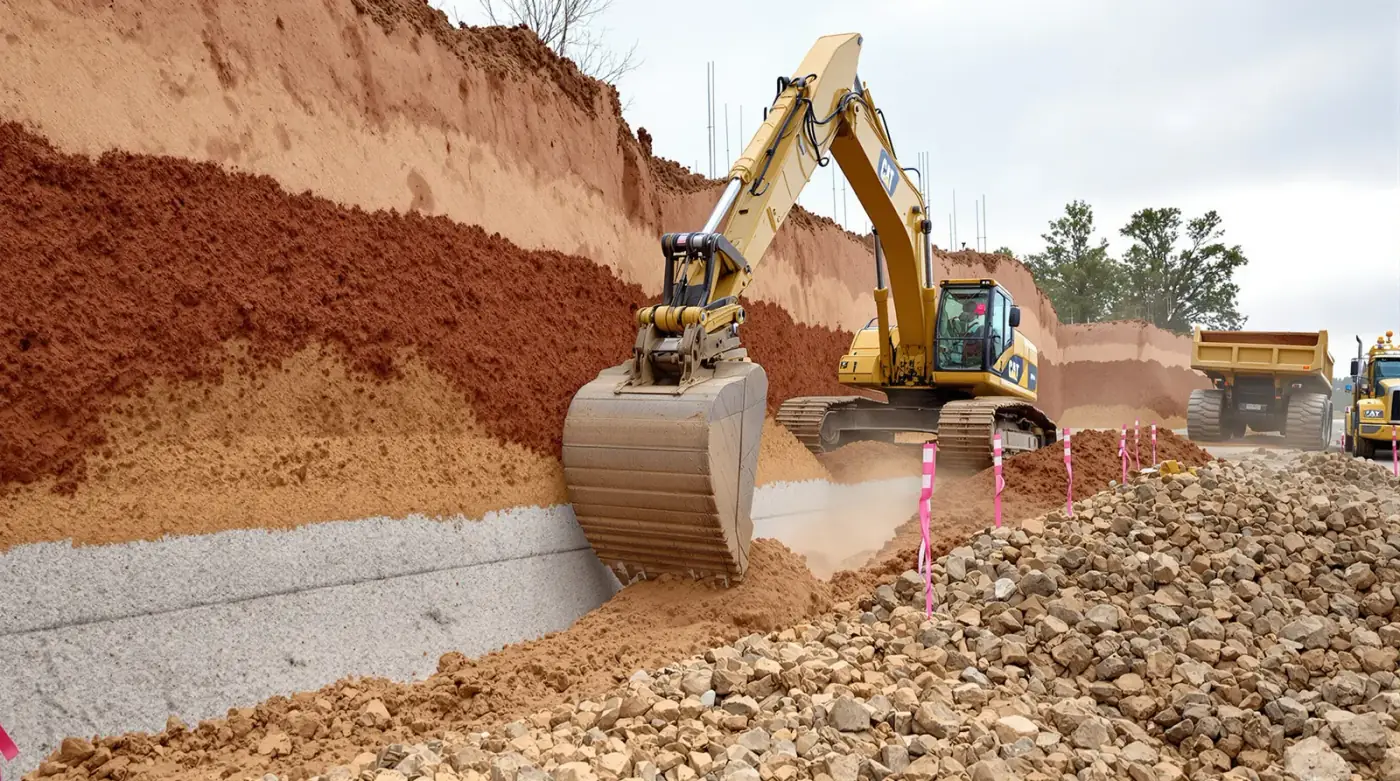
The Kansas City metro sits on some of the most challenging foundation soils in the Midwest. The dominant Wymore series clay, classified CH (fat clay) under the Unified Soil Classification System and A-7-6 under the AASHTO system, covers most of Jackson, Johnson, and Clay counties. This soil has 60 to 80 percent clay content and a "very high" shrink-swell rating. Seasonal moisture swings of 15 to 25 percent cause the soil volume to change significantly between wet and dry seasons, exerting uplift pressure on foundations during expansion and leaving voids beneath footings during contraction. Standard foundation details from other regions do not account for this behavior. Spread footings on Wymore clay are typically 30 to 50 percent larger than the same footings on granular soils. Void forms are required beneath grade beams to prevent clay heave from lifting the structure. Over-excavation of 24 to 48 inches and replacement with compacted structural fill is standard practice, not an upgrade. South of 135th Street in Johnson County, shallow Bethany Falls limestone at 3 to 15 feet of depth changes the calculation entirely — offering bearing capacity of 10,000 psf or more but requiring rock excavation at two to four times the cost of common soil removal. Near the Missouri and Kansas rivers, alluvial sand and silt deposits drain well but carry inconsistent bearing capacity that may require mat foundations or deep piers. Every site in this metro is different, and the geotech report is the only document that tells the truth about what is actually beneath the surface.
Why Splitting Excavation and Concrete Between Two Subs Costs More Than It Saves
The standard commercial construction model assigns excavation to one subcontractor and concrete to another. The excavation sub digs the footings, places structural fill, compacts it, and demobilizes. A scheduling gap of one to three weeks opens while the concrete sub schedules and mobilizes. During that gap, KC clay absorbs moisture, the compacted subgrade swells, and the density readings taken two weeks ago no longer reflect reality. The concrete crew arrives, recognizes the problem or does not, and pours on a subgrade that has moved since verification. When the footing settles six months later, the excavation sub points to their passing density reports and the concrete sub says they poured on what they were given.
Kansas City Concrete Contractors eliminates this gap by performing both the soil preparation and the concrete placement under one contract, with one crew, on one continuous schedule. The team that compacts and density-tests the structural fill sets the forms and pours the footings the same week. No demobilization. No re-compaction. No finger-pointing.
Spread Footings
Spread footings are the most common commercial foundation type in the Kansas City metro. Each footing is an independent reinforced concrete pad placed beneath a single column, spreading the concentrated column load across enough soil area to stay within the allowable bearing pressure.
On Wymore CH clay with a typical allowable bearing of 1,500 to 3,000 psf, spread footings are 30 to 50 percent larger than identical footings designed for granular soils. A column load that requires a 4-foot-square footing on sand may need a 5.5- to 6-foot-square footing on KC clay. Over-excavation of 24 to 36 inches below the footing bottom and replacement with compacted structural fill is standard practice to provide a stable bearing surface and reduce differential settlement between adjacent footings.
- → 4,000–5,000 psi air-entrained concrete, standard
- → Over-excavation 24–36" with compacted structural fill
- → Nuclear density testing on every fill lift
- → Dowels and keyways for slab-to-footing connections
Continuous & Strip Footings
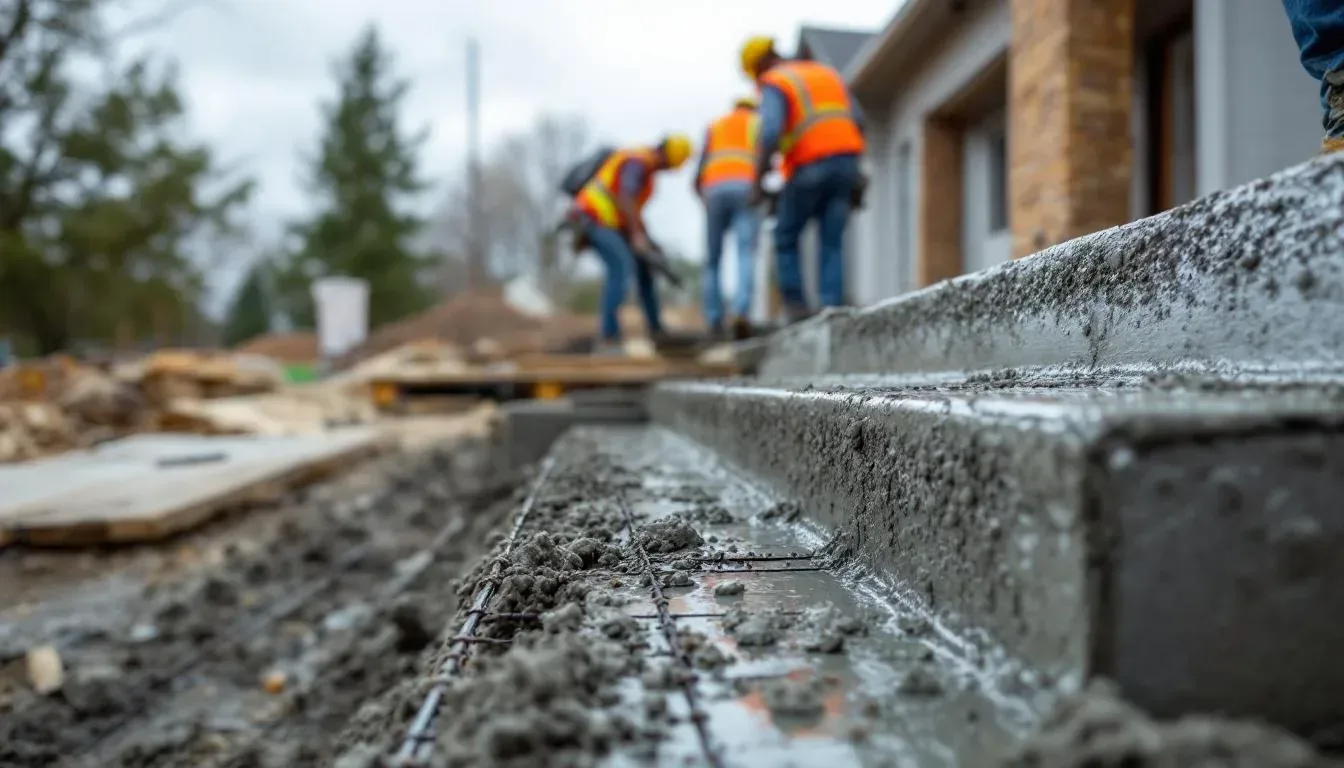
Continuous footings run beneath load-bearing walls and building perimeters, distributing wall loads along the full length of the foundation. In the Kansas City metro, continuous footings must extend below the 30 to 36 inch frost line to prevent frost heave from lifting the structure.
On Wymore clay, void forms are installed beneath grade beams and continuous footings to create an air gap that allows the clay to swell without transferring uplift forces to the concrete. Without void forms, KC clay expansion can generate uplift pressures exceeding the weight of the footing and the wall above it — cracking the foundation and distorting the structure. We install cardboard void forms (which deteriorate over time, leaving the intended air gap) at the depth and thickness specified by the structural engineer, typically 4 to 6 inches.
- → Minimum 30–36" depth below grade (KC frost line)
- → Void forms for clay swell protection
- → Waterstops at all below-grade construction joints
- → Perimeter and interior bearing wall configurations
Have Plans and a Geotech Report? We’ll Bid It.
Send your structural drawings and geotechnical report. Detailed line-item bid returned within 5 business days.
Mat & Raft Foundations
A mat foundation is a single continuous slab that covers the entire building footprint, distributing the total structural load across the maximum possible area. Mat foundations are specified when individual spread footings would overlap each other, when the soil bearing capacity is low relative to the building loads, or when differential settlement must be minimized.
In the Kansas City metro, mat foundations are common on alluvial soils near the Missouri and Kansas rivers where bearing capacity varies across the site, on old industrial sites with uncontrolled fill of unknown depth and composition, and on heavily loaded warehouse or manufacturing structures where column loads push spread footings beyond practical dimensions. Two-way mat reinforcement with top and bottom rebar mats maintains structural integrity under both positive and negative bending moments. Mat thickness typically ranges from 24 to 48 inches depending on the loading, and concrete strength is often specified at 5,000 psi or higher.
- → Two-way reinforcement: top and bottom rebar mats
- → Common on alluvial soils near MO/KS rivers
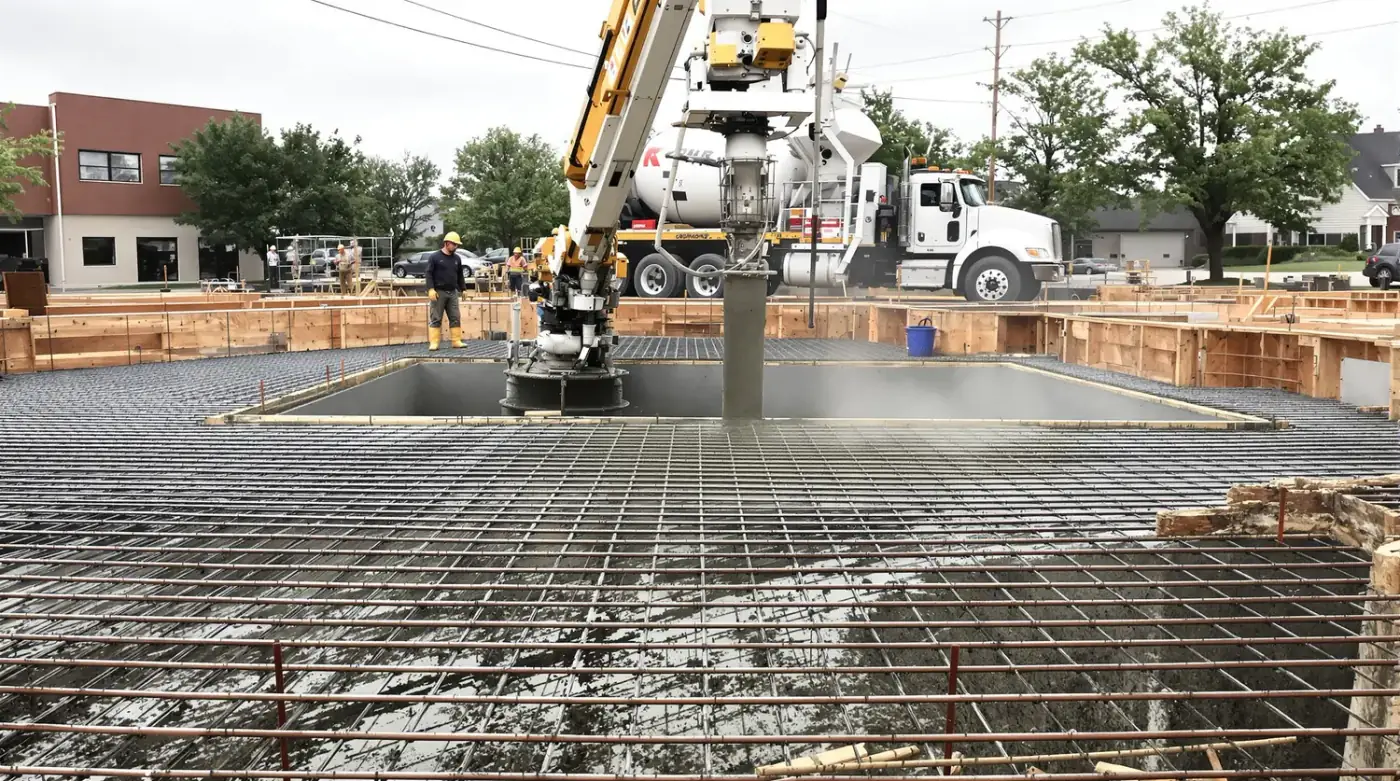
- → Continuous pour with boom pump for uniform placement
Grade Beams
Grade beams are reinforced concrete beams that span between drilled piers or caissons, transferring building loads down through unstable surface soils to competent bearing strata below. In the Kansas City metro, grade beam foundations are specified where the Wymore clay overburden is deep and unstable but limestone bedrock provides reliable bearing at 15 to 30 feet of depth.
The drilled piers are installed first by a deep foundation subcontractor, socketed into limestone, and allowed to cure. Our crew then forms and pours the grade beams that tie the pier caps together, creating a continuous perimeter and interior foundation system that supports the structure above. Void forms beneath grade beams are critical on KC clay — without them, seasonal soil expansion can generate enough uplift force to crack the beam and lift the structure. Connection details between piers and grade beams must accommodate both the vertical load transfer and any horizontal shear from wind or seismic loading.
- → Spans between drilled piers to limestone bearing at 15–30 ft
- → Void forms beneath beams for clay heave protection
- → Pier-to-beam connection details per structural design
Retaining Wall Foundations
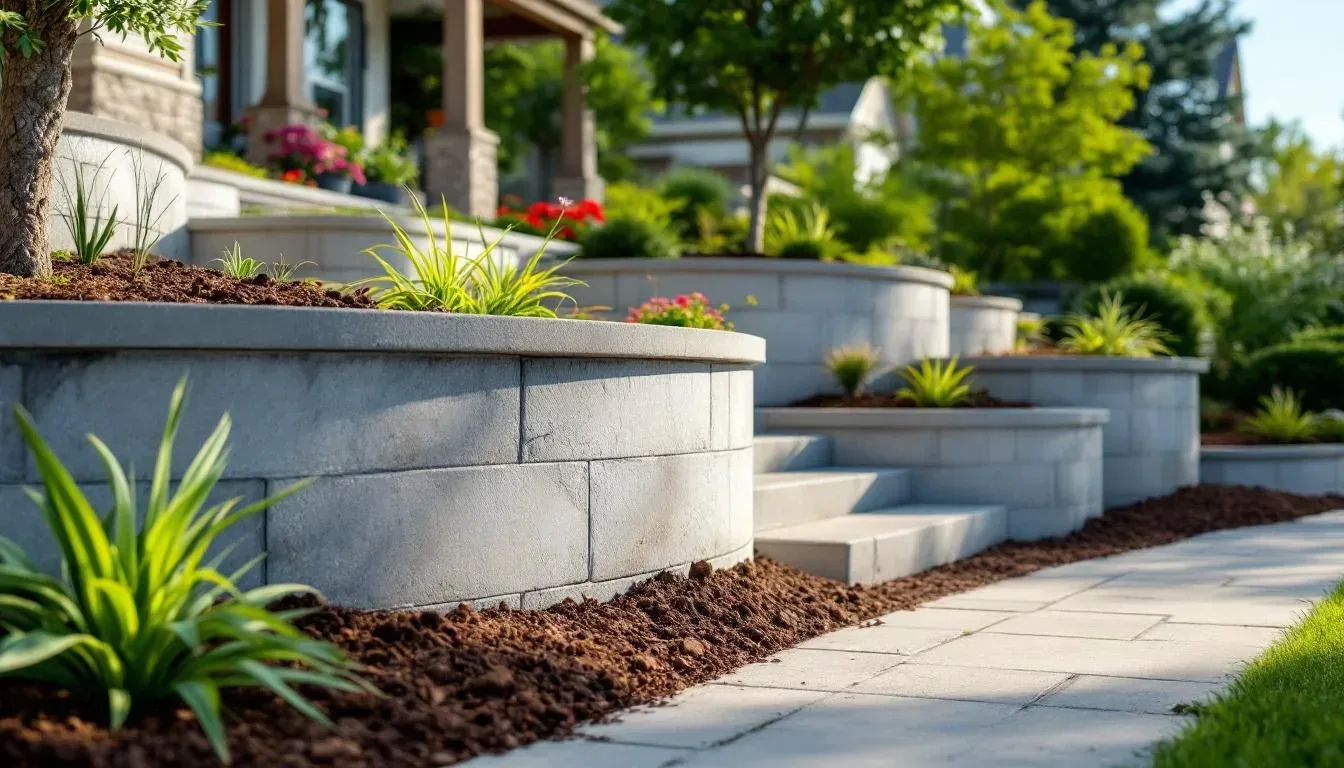
Retaining wall foundations must resist lateral earth pressure in addition to the vertical weight of the wall and any surcharge loads above. The design is governed by sliding resistance, overturning stability, and bearing pressure — all of which are heavily influenced by the soil behind the wall.
Kansas City's Wymore clay adds complexity because its shrink-swell behavior creates variable lateral pressure on the wall. When wet, the clay expands and pushes harder against the wall than the design assumed for the dry condition. When dry, it contracts and can leave voids behind the wall that fill with water during the next rain event, creating hydrostatic pressure spikes. Proper drainage behind retaining walls in KC clay is not optional — it is the single most important detail in the entire wall system. We install perforated drain pipe in a gravel-wrapped French drain at the base of every retaining wall foundation, connected to a daylight outlet or storm system.
- → Lateral earth pressure design for KC clay conditions
- → French drain system at base of every wall
- → Waterproofing membrane on retained-earth face
Equipment Pads
Equipment pads support HVAC condensing units, rooftop unit curbs, emergency generators, manufacturing machinery, and any mechanical or electrical equipment that requires a stable, level concrete platform. The design varies significantly depending on the equipment: a residential-scale condenser pad is 4 inches thick with welded wire fabric, while a 2,000 kW emergency generator pad may be 18 inches thick with #5 rebar at 12-inch centers and cast-in-place anchor bolts torqued to manufacturer specifications.
Vibration isolation is critical for rotating equipment. Inertia blocks — massive concrete pads that absorb vibration energy before it reaches the building structure — are sized by weight ratio to the equipment they support, typically 2 to 5 times the equipment operating weight. Anchor bolt patterns must match the equipment manufacturer's installation drawings exactly, with bolt location tolerances of plus or minus one-eighth inch on most industrial equipment.
- → Anchor bolt patterns to manufacturer specs (±1/8" tolerance)
- → Vibration isolation and inertia block design
- → HVAC, generator, and manufacturing equipment applications
Dock-High Foundations
Kansas City sits at the intersection of I-70, I-35, and Hwy 71 — three of the most heavily trafficked freight corridors in the central United States. This makes KC one of the highest-demand markets in the Midwest for warehouse and distribution construction, and every one of those buildings needs dock-high foundations.
Dock walls are typically 48 to 52 inches above the truck apron to match standard trailer bed height. The dock wall foundation must support not only the wall itself but also the dynamic impact loads from trucks backing into the dock, the weight of dock levelers (1,500 to 3,000 pounds each), and the concentrated loads from leveler pit frames embedded in the concrete. Truck wells — depressed approach ramps for drive-in loading — require retaining wall foundations on both sides with proper drainage to prevent water accumulation. We pour dock walls, leveler pits, truck wells, and the adjacent warehouse floor slab as an integrated system, because the connections between these elements determine whether the dock performs correctly under daily truck traffic.
- → Dock walls 48–52" above truck apron
- → Leveler pits, bumper blocks, and truck wells
- → Integrated pour with warehouse floor slab
From Geotech Report to Finished Foundation
Eight phases of commercial foundation construction in the Kansas City metro. Every phase verified before advancing to the next.
Plan Review & Geotech Analysis
Review structural drawings, geotechnical boring logs, and soil classification data.
Identify KC-specific risks: Wymore clay shrink-swell, seasonal moisture variation, shallow limestone, or alluvial conditions. Flag any discrepancies between the geotech recommendations and the structural design before mobilization.
Site Prep & Excavation
Clearing, stripping, and mass excavation to subgrade elevation per the structural drawings.
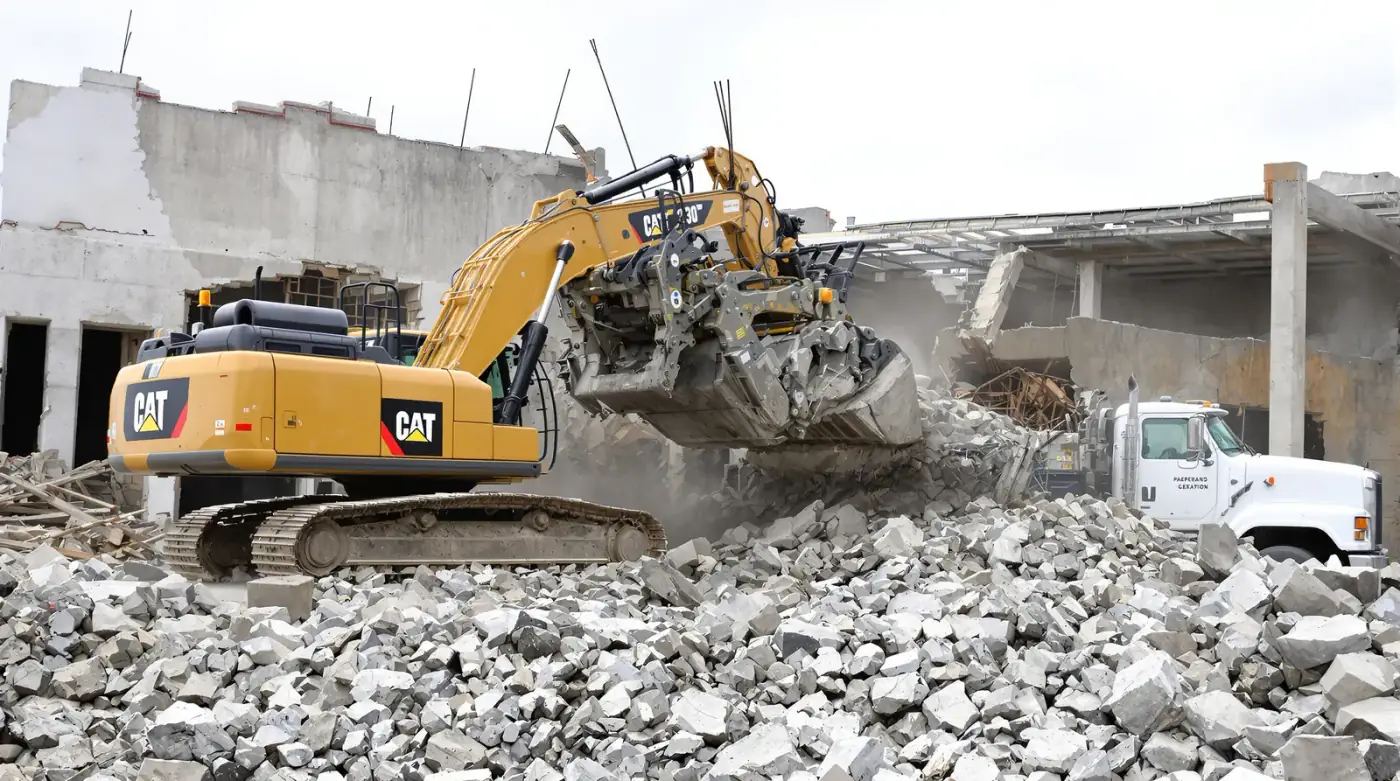
Over-excavation of unsuitable native soil — typically 24 to 48 inches on Wymore CH clay sites — using hydraulic excavators sized to the project. Spoils classified and either stockpiled for reuse or hauled off-site with the 25-35% swell factor accounted for in truck counts.
Soil Treatment & Compaction
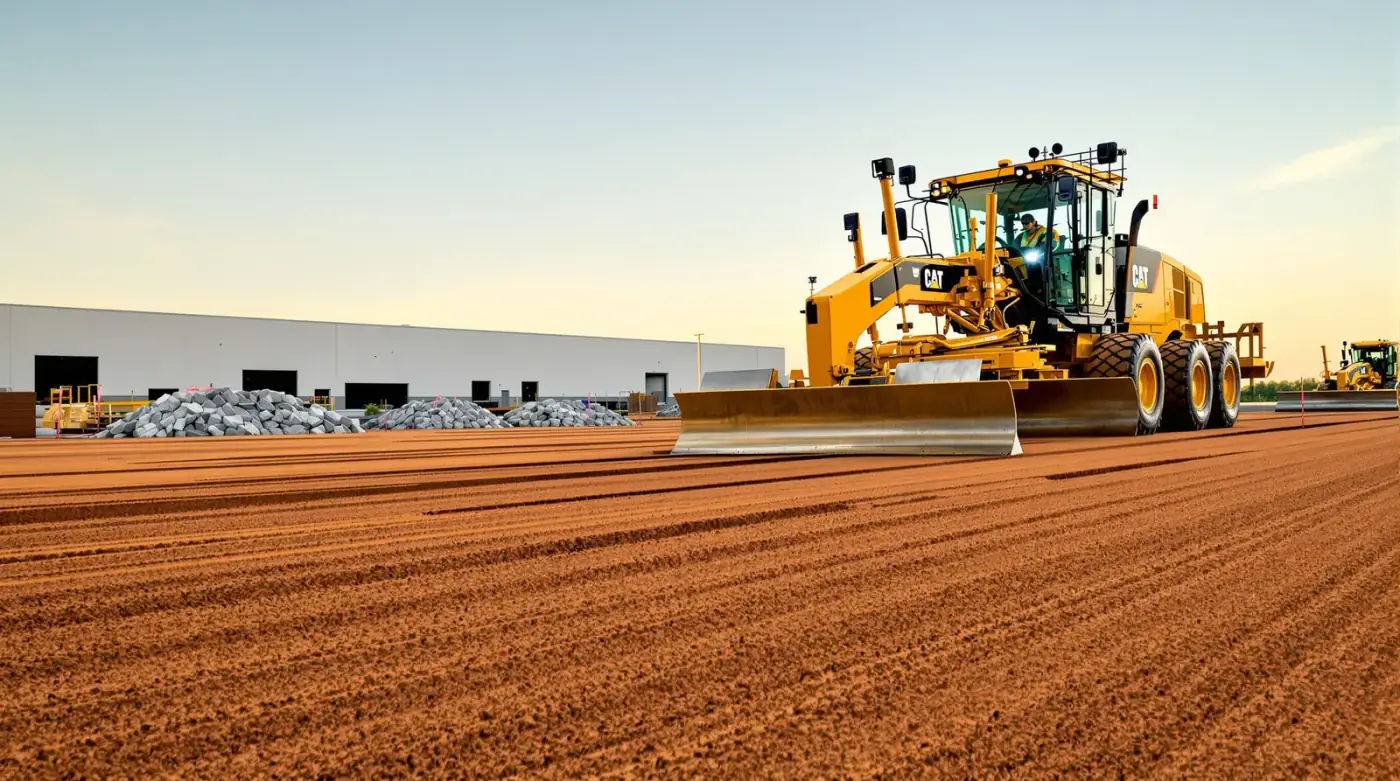
Import structural fill (typically crushed limestone or approved granular material), place in 8-inch uncompacted lifts, moisture-condition to within 2% of optimum, and compact with vibratory roller or sheepsfoot to 95% modified proctor per ASTM D1557.
Nuclear density gauge verification on every lift at depth — not just the surface. This is where most KC foundation failures originate, and where our single-source model delivers the most value.
Formwork
Steel or heavy-gauge wood forms set to structural dimensions.
Laser-checked for level and alignment. Keyways cut for slab-to-footing connections. Waterstops installed at all construction joints below grade. Snap ties and bracing rated for the concrete head pressure of the pour depth. Dowels set for column pedestals and slab connections per the structural rebar schedule.
Reinforcement
Rebar per the structural engineer's schedule — size, spacing, coverage, lap lengths, and development lengths verified against the drawings.
Chair supports at the correct height to maintain bottom coverage. Mechanical splices or welded connections where specified. Top and bottom mats in mat foundations with clear spacing maintained between layers. All reinforcement inspected by our crew before calling for the special inspector.
Pre-Pour Inspection
City building inspector and/or special inspection agency verification of formwork dimensions, rebar placement, embed plates, anchor bolts, and any mechanical or electrical sleeves passing through the foundation.
Hold point — no concrete is placed until the inspection is passed and documented. We schedule the inspection with 48-hour advance notice and ensure the site is clean and accessible.
Concrete Placement
4,000 to 5,000 psi air-entrained concrete placed by boom pump or line pump depending on access and volume.
Internal vibrators consolidate every lift to eliminate honeycombing and voids. Concrete temperature monitored in cold weather per ACI 306. Curing compound applied immediately after finishing, or wet cure with burlap and soaker hoses for 7 days on critical pours. Break test cylinders pulled for 7-day and 28-day strength verification.
Strip, Backfill & Waterproof
Forms stripped after concrete reaches sufficient early strength, typically 24 to 48 hours depending on temperature and mix design.
Below-grade surfaces receive waterproofing membrane — spray-applied or sheet membrane per the project specification. Backfill placed in lifts and compacted against the foundation walls without displacing the waterproofing. Final grade established for slab-on-grade construction or building enclosure to follow.
KC Soil & Foundation Challenges
Foundation engineering in the Kansas City metro is governed by soil behavior that does not follow textbook assumptions. The dominant Wymore series clay across Jackson, Johnson, and Clay counties is classified CH (fat clay) with 60 to 80 percent clay content and a "very high" shrink-swell rating per the USDA-NRCS soil survey. Atterberg limits testing on Wymore clay consistently shows liquid limits above 50 and plasticity indices above 30 — placing it firmly in the high-plasticity zone on the Casagrande plasticity chart. The practical consequence for foundation design is straightforward: allowable bearing pressures on native Wymore clay range from 1,500 to 3,000 psf depending on moisture content and depth, which is roughly one-third to one-half of the bearing capacity available on granular soils.
Seasonal moisture swings are the primary failure mechanism for foundations on KC clay. The soil absorbs water during spring rains and winter thaws, expanding and generating uplift pressure on the underside of footings. During summer drought and fall drying, the soil contracts, creating voids beneath footings that allow the structure to settle. This annual cycle of heave and settlement produces cumulative differential movement that cracks foundations, distorts structural frames, and damages finishes and mechanical systems. The worst outcomes occur when one side of a building sits on clay at natural moisture while the other side borders an irrigated landscape, a parking lot that sheets water toward the foundation, or a broken downspout that saturates the soil locally. The moisture differential produces more damage than the absolute moisture content.
Beyond the clay belt, the KC metro presents three other foundation challenges. Alluvial soils along the Missouri and Kansas rivers — classified SM and SC (silty and clayey sands) — drain well and compact easily but can carry inconsistent bearing capacity across a single site, making mat foundations or deep piers the safer choice over spread footings. Old uncontrolled fill is common on redevelopment sites throughout the urban core, particularly in the East Bottoms, West Bottoms, and Fairfax industrial districts, where fill material of unknown origin was placed decades ago without compaction documentation. Building on uncontrolled fill without removal and replacement is never advisable. Southern Johnson County introduces shallow Bethany Falls limestone at 3 to 15 feet of depth — which actually improves foundation performance when the structural engineer designs to bear on rock, but requires hoe-ram rock excavation that costs two to four times more than common clay removal.
- Dominant Soil
- Classification: CH (Fat Clay) A-7-6
- Shrink-Swell Rating
- Rating: Very High
- Frost Depth
- KC metro: 30–36 inches
- Typical Bearing Pressure
- Clay: 1,500–3,000 psf
- Limestone: 10,000+ psf
- Common Over-Excavation
- Depth: 24–48 inches
Expansive Clay Belt
Wymore-Ladoga CH/CL clay complex. Very high shrink-swell. Foundations 30-50% oversized vs granular soil. Over-excavation and structural fill replacement standard on commercial projects.
River Valley Alluvial
SM/SC silty-clayey sands with variable bearing capacity. Drains well but liquefaction risk in flood events. Mat foundations or deep piers often specified over spread footings.
Limestone Shelf
Bethany Falls and Argentine limestone at 3-15 ft depth. Excellent bearing (10,000+ psf) but rock excavation at $25-50/BCY. Foundations can bear directly on rock when engineered correctly.
The Equipment and Verification Behind Every Foundation We Pour
Excavation & Earthwork Fleet
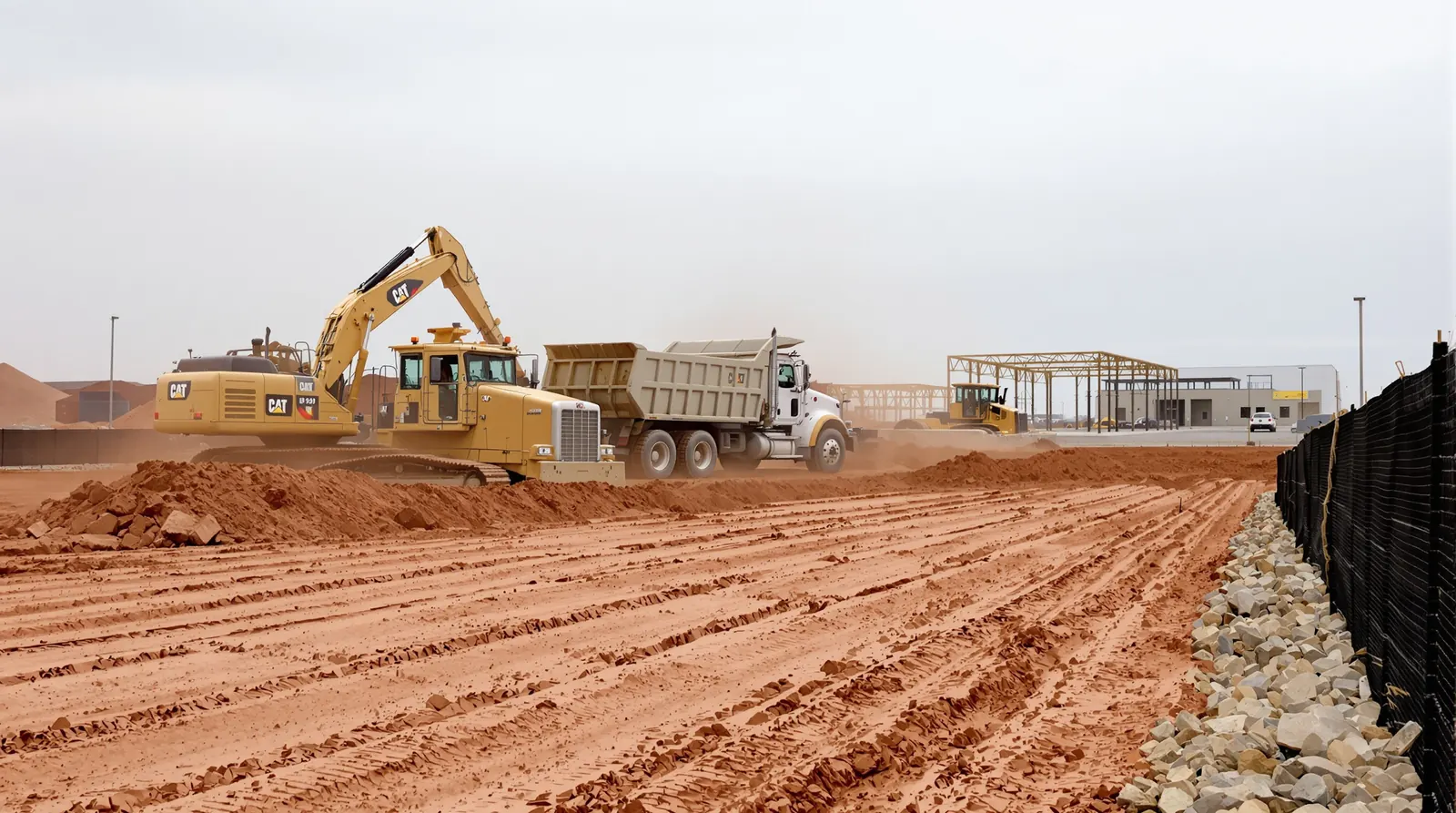
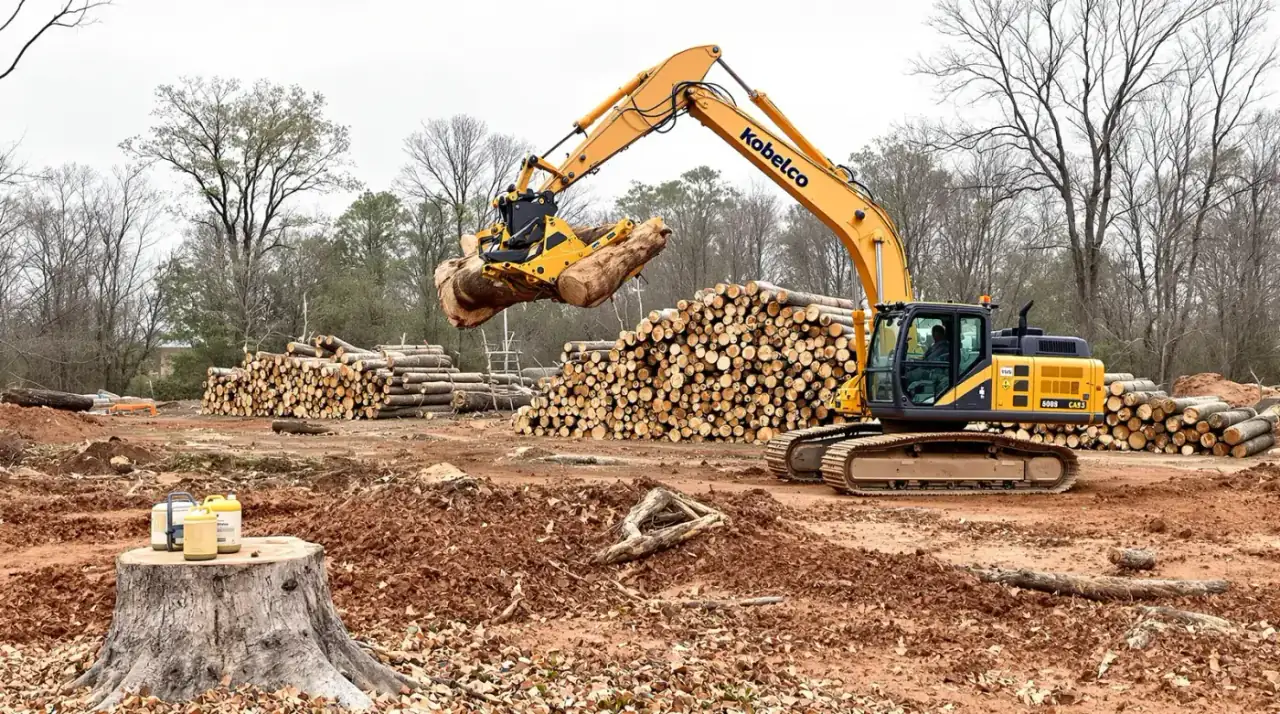
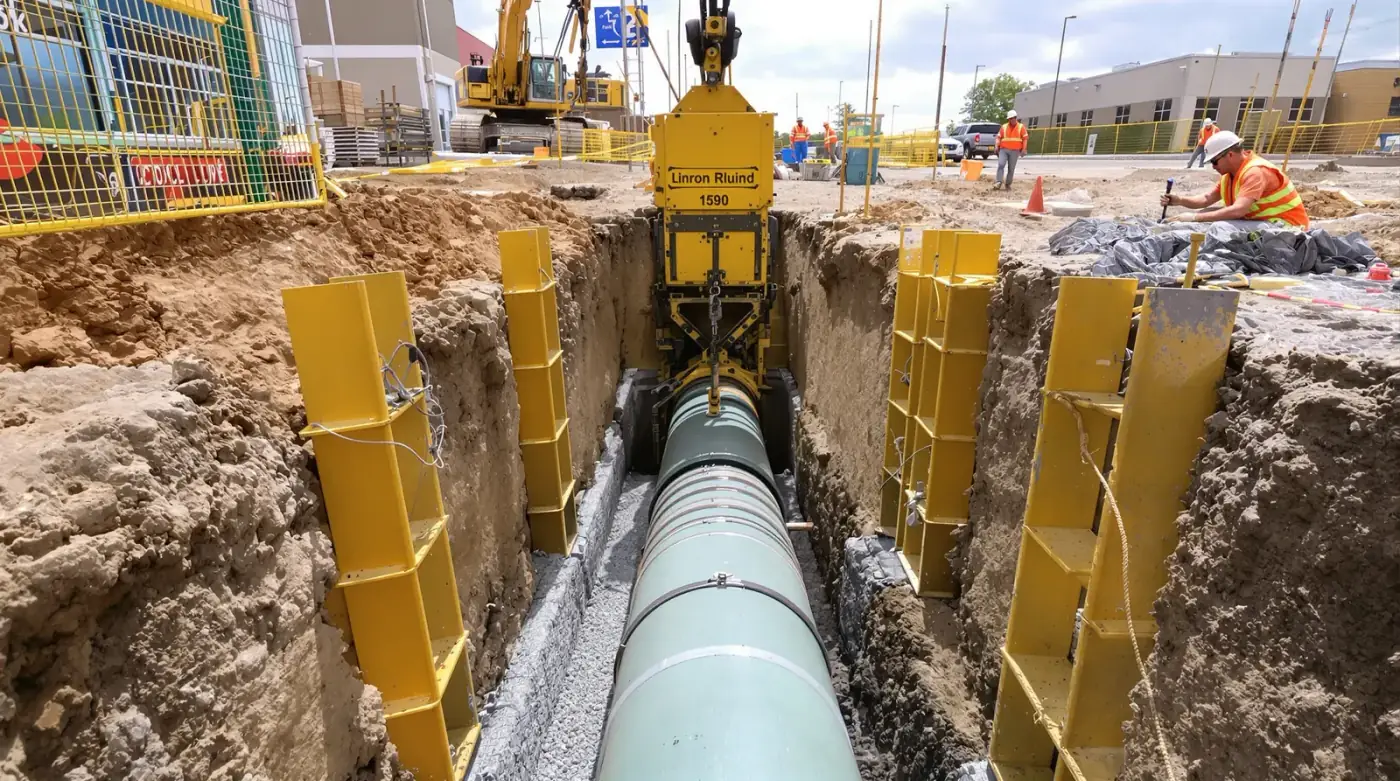
Our excavation fleet is sized to commercial foundation work: CAT 320 and 330 hydraulic excavators for mass excavation and footing trenches, skid steers for tight-access urban sites, and vibratory rollers and sheepsfoot compactors for structural fill placement. We match the machine to the scope — compact equipment for interior tenant improvement work, full-size excavators for new construction on open sites. Every piece of earthwork equipment is operated by crew members trained in OSHA excavation safety and our own compaction verification protocols. We do not subcontract the earthwork on foundation projects.
Concrete Placement Capability
Foundation concrete is placed by boom pump for large pours with extended reach requirements, or line pump for smaller footings and confined spaces. Internal vibrators consolidate every concrete lift to eliminate honeycombing, voids, and air pockets around reinforcement — because a void against a rebar bar reduces the bond strength and the corrosion protection that concrete coverage is designed to provide. Laser levels verify form elevations before the pour, and concrete temperature is monitored on every cold weather placement per ACI 306 requirements. Break test cylinders are pulled at 7-day and 28-day intervals to verify specified compressive strength.
Industries & Project Types
Warehouse & Distribution
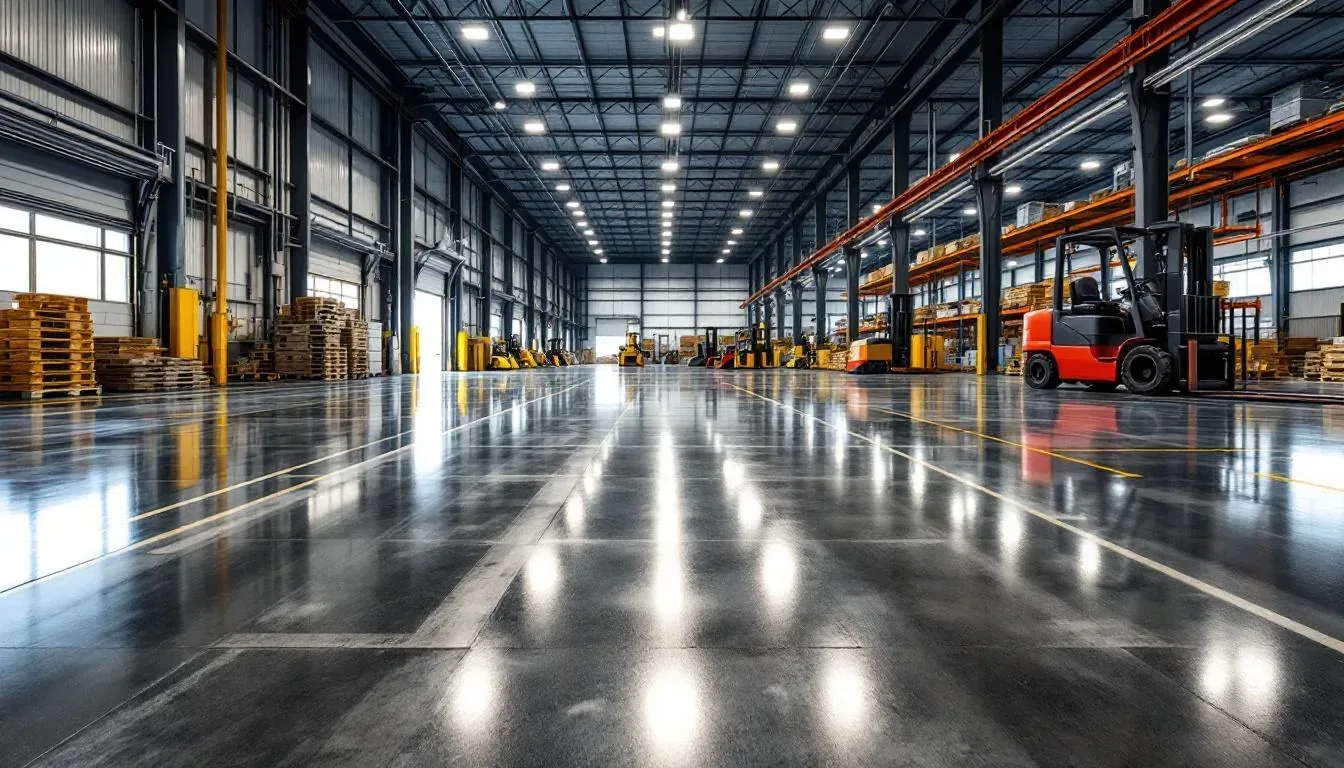
Heavy floor loads, dock-high walls, and precision flatness specs. Foundations designed for racking systems and forklift traffic.
Learn More →Restaurant & Retail
Fast-track pad foundations on infill sites. Grease interceptor pits, utility penetrations, and tight urban lot lines.
Medical & Office
Vibration-sensitive foundations for imaging equipment. Precise elevator pit dimensions and clean room sub-slab conditions.
Industrial & Manufacturing
Heavy equipment pads, vibration isolation, chemical-resistant concrete, and anchor bolt patterns for production machinery.
Learn More →Multi-Family Residential
Post-tensioned or conventional foundations for 3-5 story wood-frame over podium construction. Parking garage foundations below.
Church & Institutional
Large clear-span worship spaces requiring deep foundations or mat slabs. Fellowship halls, classrooms, and ADA-compliant entrances.
Parking Structures
Drilled pier and grade beam foundations for multi-level parking. Heavy column loads and strict waterproofing at below-grade levels.
Learn More →Tenant Improvement
Foundation modifications for new tenant buildouts: equipment pad additions, floor saw-cuts for plumbing, and slab leveling for new use.
What Commercial Foundation Work Costs in the Kansas City Metro
| Foundation Type | Unit | KC Metro Range |
|---|---|---|
| Spread Footings | per CY | $350–600 |
| Continuous Footings | per LF | $25–75 |
| Mat / Raft Foundation | per SF | $12–25 |
| Grade Beams | per LF | $40–120 |
| Retaining Wall Foundations | per LF | $50–150 |
| Equipment Pads | per SF | $8–18 |
| Over-Excavation & Structural Fill | per CY | $15–35 |
| Compaction Testing | per test | $150–300 |
Foundation cost is driven by four primary variables: soil condition (which determines over-excavation depth and fill volume), structural loading (which determines footing size and reinforcement density), site access (which affects equipment selection and concrete pump reach), and project timing (winter pours carry a 15-25% concrete premium for cold weather protection). Every bid we issue breaks out excavation, structural fill, compaction testing, formwork, reinforcement, concrete, and backfill as separate line items. This level of detail allows your project manager to compare our bid directly against competing subcontractors and identify where the real cost differences are — not just in the bottom-line number, but in the scope behind each line.
What Kansas City GCs and Developers Ask About Foundation Work
How long does a commercial foundation take in Kansas City?
What soil testing do you require before pouring a commercial foundation?
How does Kansas City clay affect foundation design?
When should I choose spread footings vs a mat foundation?
Do you handle the excavation and soil prep, or just the concrete?
What concrete strength do you use for commercial foundations in Kansas City?
Can you pour commercial foundations in winter in Kansas City?
What compaction standards do you follow for foundation subgrade?
How do you handle rock when excavating for foundations in KC?
Do you coordinate special inspections for commercial foundations?
What is the deepest commercial foundation you have poured in the KC metro?
How do I get a bid for commercial foundation work in Kansas City?
Commercial Foundation Work Across the Kansas City Metro
Ready to Bid Your Foundation Project?
Send us your structural drawings, geotechnical report, and project timeline. We return a detailed line-item bid within 5 business days that separates excavation, structural fill, compaction testing, formwork, reinforcement, concrete, and backfill — so your team can compare scope-for-scope against other subcontractors. If you are early in the design phase and do not yet have structural drawings, we can provide a budgetary estimate based on the building footprint, loading, and geotech report to support your project planning.
- ✓5-day bid turnaround on complete plan sets
- ✓Line-item breakdown for apples-to-apples comparison
- ✓Sitework + concrete under one contract
- ✓Licensed in Missouri and Kansas
Start Your Bid Request
Click below to open the bid request form. Provide the project address, building type, approximate square footage, and any drawings or geotech reports you have available. We respond within one business day to confirm receipt and request any additional information needed for a complete bid.
Beyond Foundations: Full-Scope Commercial Concrete
Sitework & Excavation
Mass excavation, grading, utility trenching, and sub-base preparation.
Parking Lots
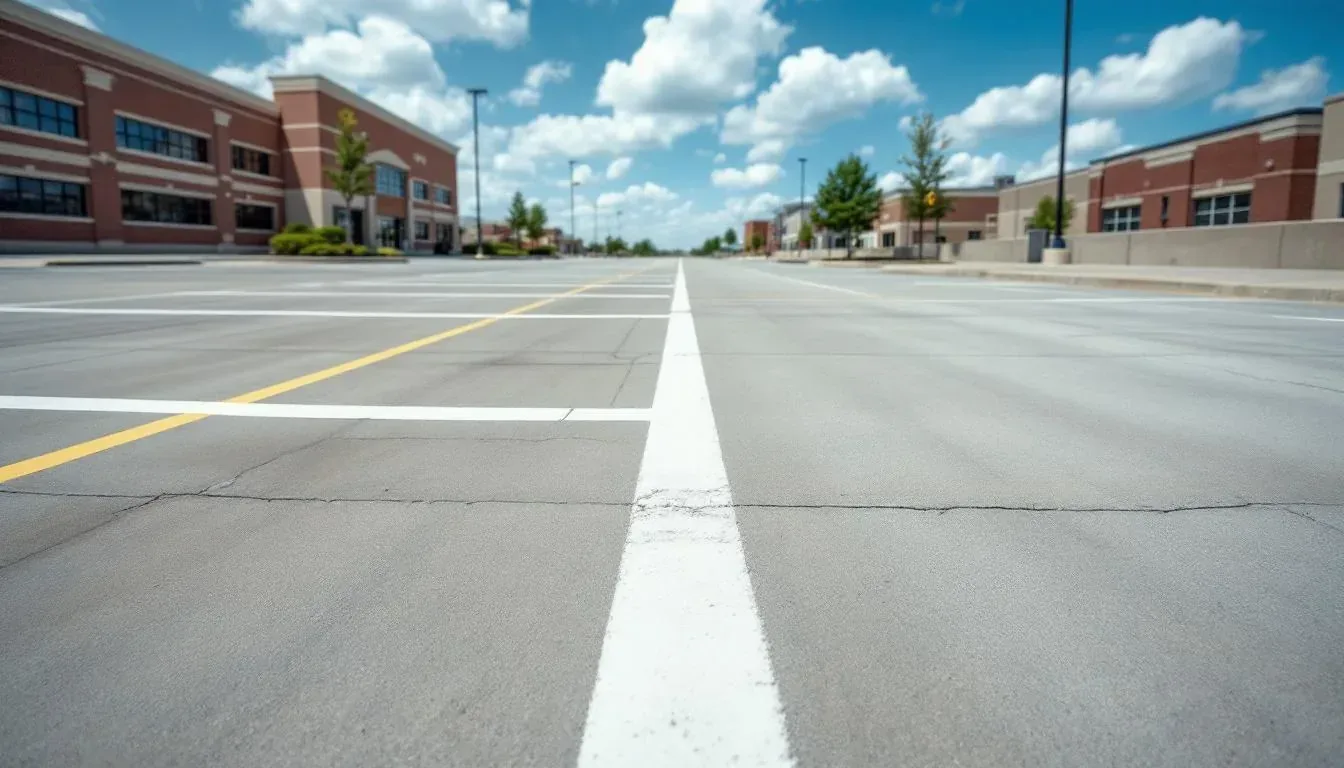
Concrete parking lot construction for commercial and industrial properties.
Warehouse & Industrial Floors
High-tolerance industrial slabs with FF/FL flatness specs.
Retaining Walls
Structural and gravity retaining walls for grade changes and earth retention.
ADA Ramps & Compliance
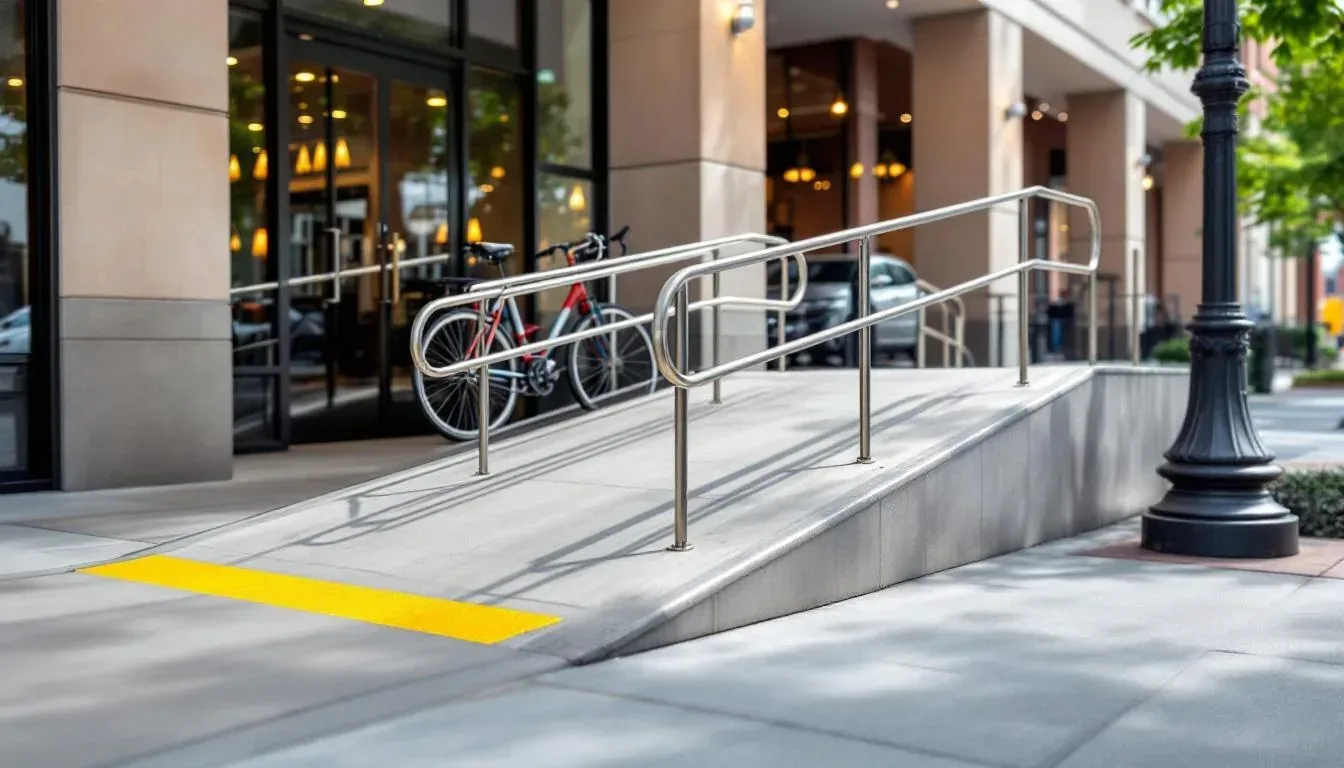
ADA-compliant ramps, landings, and accessible route construction.