Warehouse and Industrial Concrete Floor Contractors in Kansas City
Heavy-duty concrete floors engineered for forklifts, pallet jacks, and nonstop operations. New pours, repairs, polishing, and protective coatings — scheduled year-round because the work is indoors.
What Makes a Warehouse Concrete Floor Built to Perform?
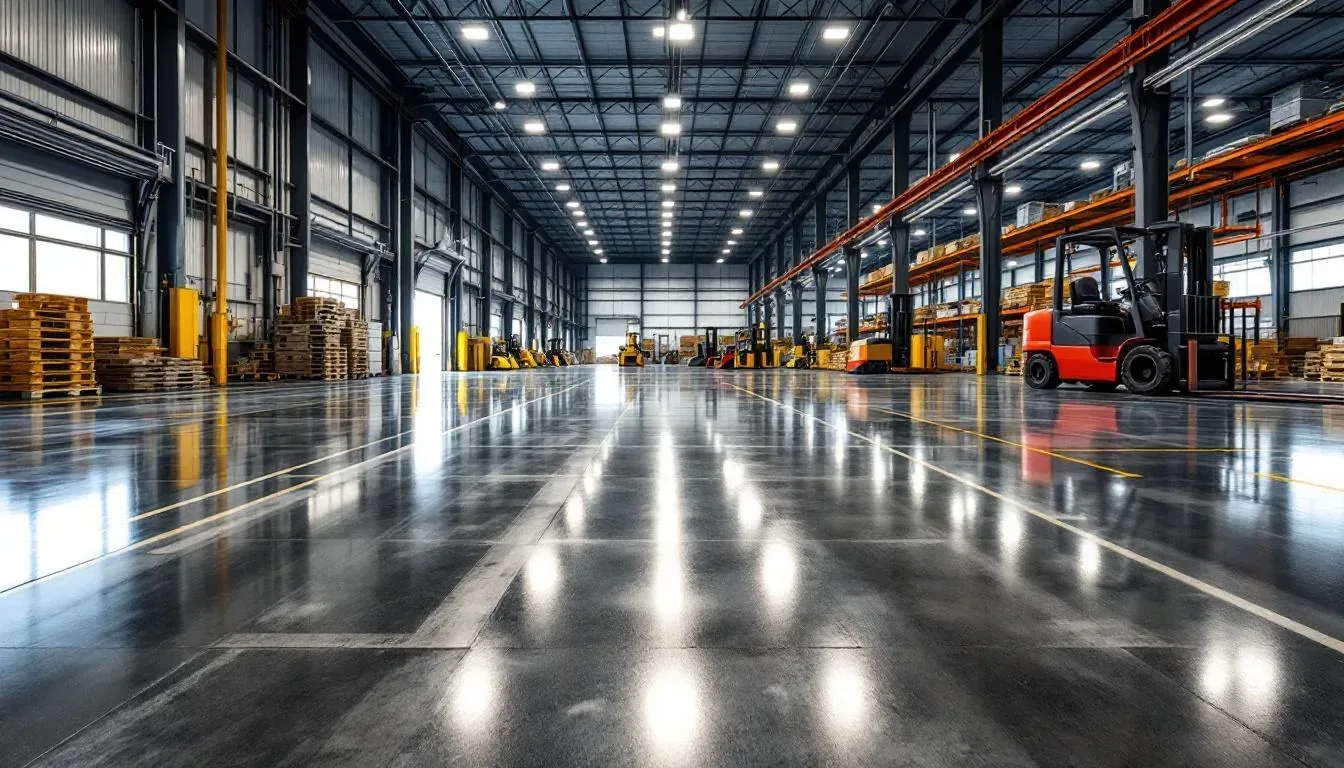
A warehouse concrete floor built to perform starts with engineered slab thickness, proper joint spacing, fiber reinforcement, vapor barriers, and surface hardeners — all specified for the loads your operation actually carries. A damaged warehouse floor is more than an eyesore — it is an operational liability. Cracked slabs catch forklift wheels. Spalling surfaces damage pallets and product. Uneven joints cause load shifts that put workers at risk.
In Kansas City's distribution-heavy economy, warehouse downtime translates directly to lost revenue. A cracked floor that fails an OSHA inspection shuts down a section of your facility until repairs are completed. Forklifts hitting broken joints accelerate tire wear and increase maintenance costs. Dust from deteriorating concrete contaminates inventory and triggers air quality concerns. The longer the floor degrades, the more expensive the fix becomes — and the greater the risk to your bottom line.
Kansas City Concrete Contractors builds warehouse and industrial floors engineered for the loads your operation actually carries. We design for forklift classifications, racking point loads, and traffic patterns specific to your facility. Fiber reinforcement, properly spaced joints, vapor barriers, and surface hardeners create a floor system that handles decades of heavy use without cracking, dusting, or settling. With 377+ completed projects since 2015 and year-round scheduling for indoor work, we keep your project on timeline regardless of the season.
How Are Industrial Warehouse Floors Engineered for Heavy Loads?
A warehouse floor is not a residential slab poured thicker. It is an engineered system designed to support concentrated loads, resist abrasion, control moisture migration, and maintain flatness over tens of thousands of square feet. Every element — from the sub-base compaction to the surface finish — serves a specific structural or operational purpose.
Standard industrial floors use 6–8 inches of reinforced concrete over a compacted aggregate base with a polyethylene vapor barrier beneath the slab. Thickness depends on the load analysis: a light-duty storage warehouse may only need 6 inches, while a facility running loaded forklifts or supporting multi-tier racking systems requires 7–8 inches with additional reinforcement. We use a combination of welded wire fabric or rebar and synthetic fiber mesh to control cracking and distribute loads across the slab.
Joint layout determines where the slab is allowed to move. Improperly spaced joints cause random cracking — the single most common failure in warehouse concrete. We design joint spacing based on slab thickness, concrete mix design, and forklift traffic patterns. Joints are cut with diamond saws within 12 hours of the pour to control shrinkage cracking, and filled with semi-rigid epoxy or polyurea to prevent debris buildup and wheel impact damage.
Surface treatments extend floor life and reduce maintenance costs. Lithium densifiers penetrate the surface to harden the concrete and eliminate dusting. Polished concrete creates a light-reflective, abrasion-resistant finish ideal for distribution centers. Epoxy and polyurethane coatings provide chemical resistance for manufacturing and food processing facilities. Each treatment serves a different operational need — we recommend based on your specific use case.
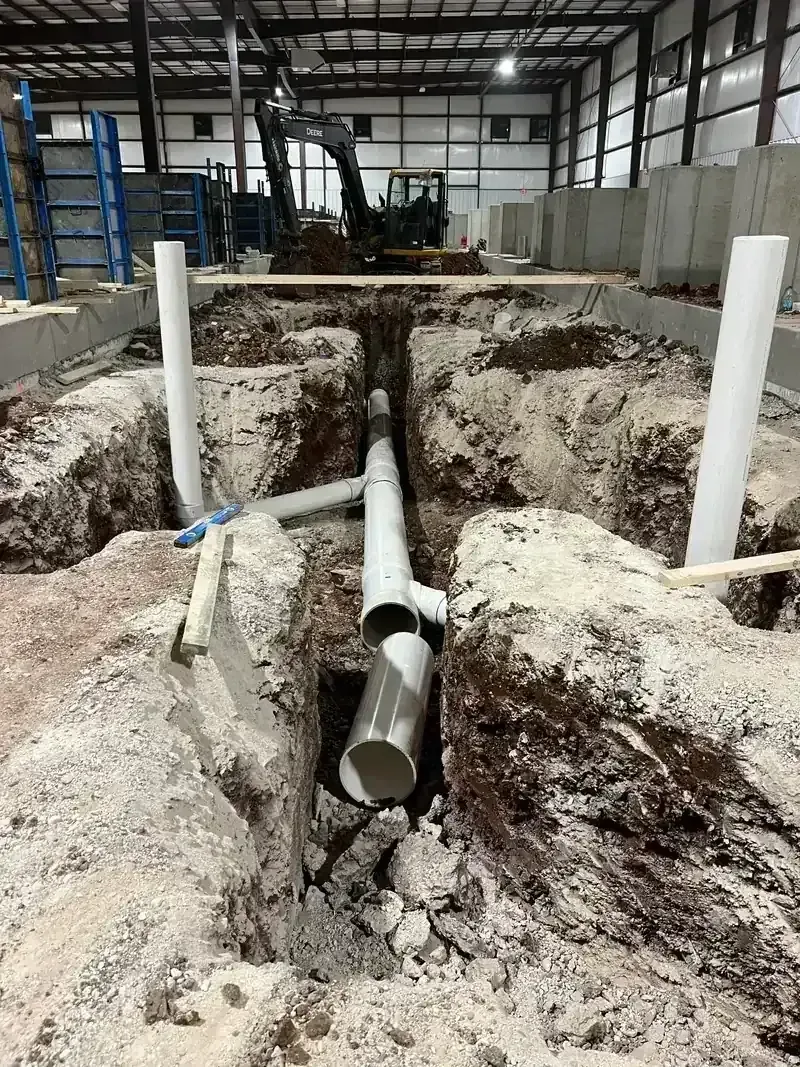
Drainage and slope are critical in facilities that require wash-down cleaning or handle liquids. We design floor slopes to direct water toward trench drains or floor drains without creating low spots where water pools. For cold-storage facilities, insulation layers and heated sub-slabs prevent frost heave beneath the slab.
We also handle parking lot construction for the areas surrounding your warehouse, and ADA-compliant ramp installations for dock access and entryways — keeping your entire facility compliant and operational under one contractor.
Your Warehouse & Industrial Floors Project in 4 Steps
Free Consultation
We visit your property, discuss your vision, and provide a detailed estimate with no obligation. Every question answered up front.
Design & Planning
Choose your materials, finish, and layout. We create a plan tailored to your property and KC's soil and climate conditions.
Professional Installation
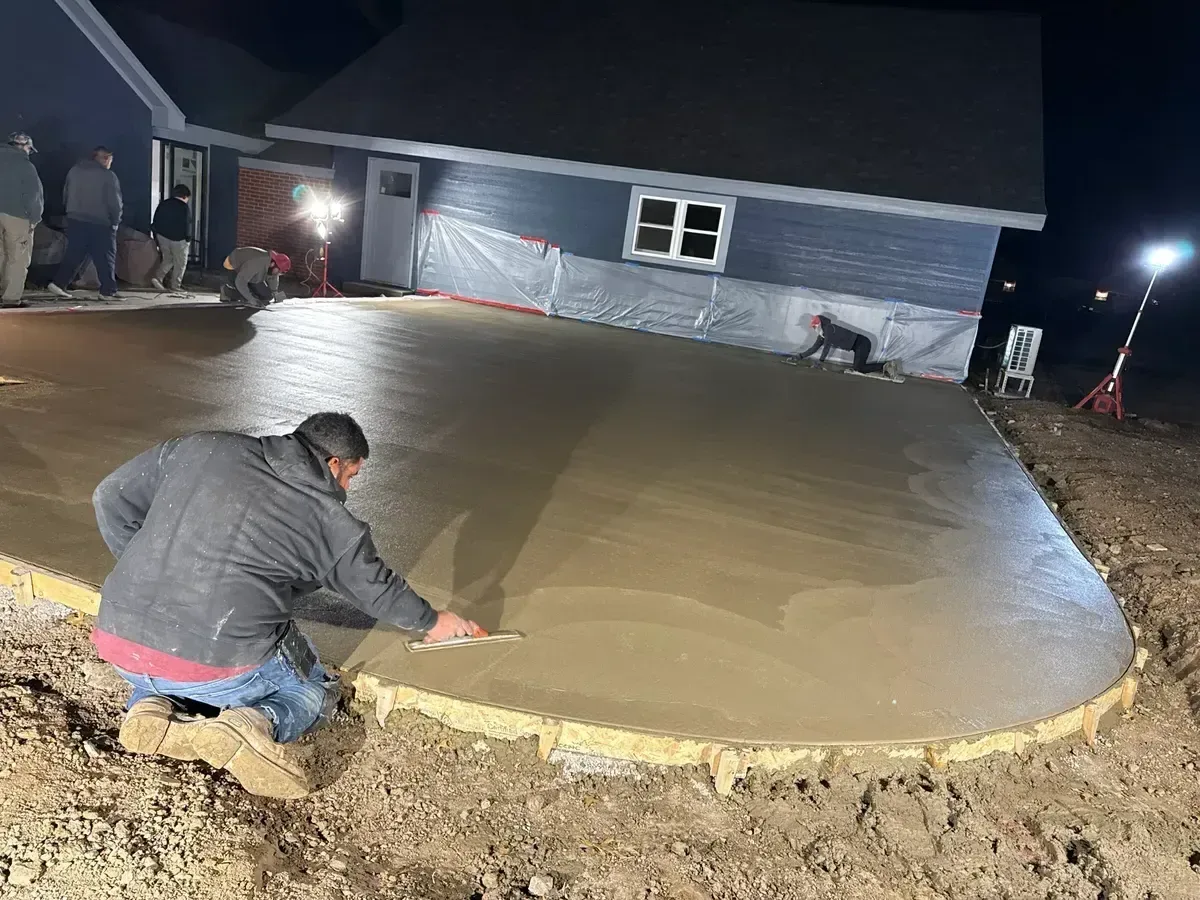
Our crew preps the site, pours, and finishes your concrete with precision. Most residential projects wrap in 1-4 days.
Final Walkthrough
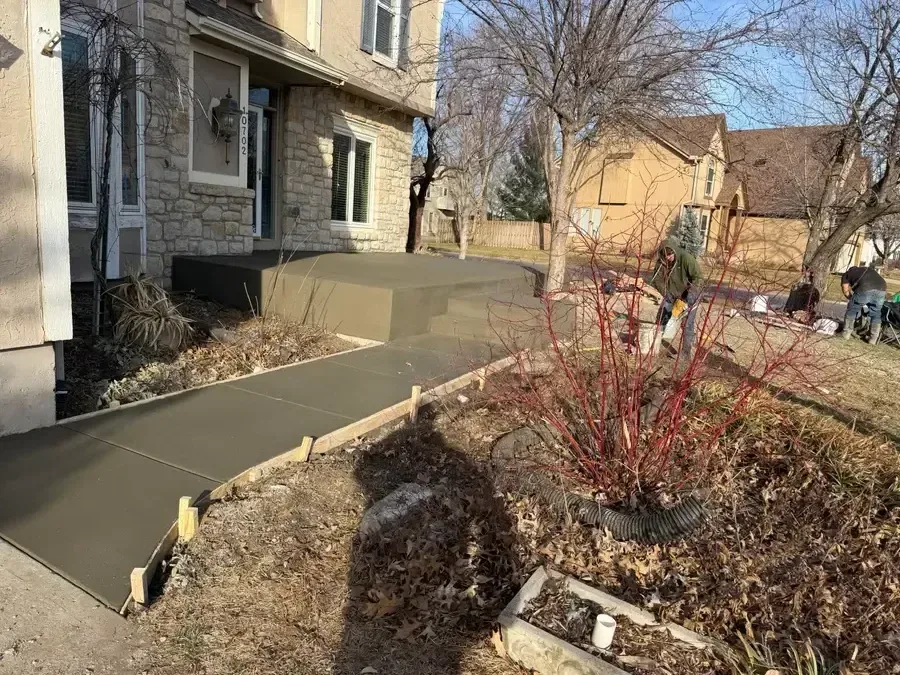
We inspect every inch with you. Sealant applied where needed. We don't leave until you're completely satisfied with the result.
Why Choose Kansas City Concrete Contractors for Warehouse & Industrial Floors
Engineered for Heavy Equipment
Fiber-reinforced slabs designed for forklift traffic, pallet jacks, and heavy racking systems. Load-rated to handle the daily punishment of warehouse operations without cracking or spalling.
Year-Round Scheduling
Warehouse floors are indoor work. We pour and finish regardless of Kansas City's weather — no seasonal delays, no waiting for spring. Your project stays on schedule 12 months a year.
Flat Floor Specialists (FF/FL Rated)
Laser-screed technology delivers the flatness and levelness ratings your operation requires. High FF/FL numbers mean forklifts roll smoothly and racking systems sit level.
Minimize Downtime
We phase pours to keep portions of your facility operational during construction. Rapid-set concrete options get you back to full capacity faster — because every day offline costs revenue.
377+ Projects Since 2015
Warehouses, distribution centers, manufacturing plants, and retail backrooms across the KC metro. We understand the demands of commercial concrete and deliver floors that perform under pressure.
Surface Protection Options
Epoxy coatings, polyurethane sealers, densifiers, and polished finishes that resist chemicals, abrasion, and tire marks. The right surface treatment extends floor life by decades.
What Our Customers Say
"We needed 15,000 square feet of warehouse floor replaced without shutting down operations. They phased the pour over two weekends and we never missed a shipment. Exceptional planning."
— David R., Kansas City, MO
"The polished concrete in our distribution center looks professional and holds up to constant forklift traffic. Six months in, not a single crack or chip. Worth every dollar."
— Jennifer M., Olathe, KS
"Had epoxy coating failing across our entire shop floor. They ground it down, repaired the slab, and applied a new industrial coating in four days. Floor looks and performs like new."
— Robert K., Lenexa, KS
How Much Do Warehouse and Industrial Floors Cost in Kansas City?
| Floor Type | Cost / Sq Ft | Typical 10,000 Sq Ft |
|---|---|---|
| Standard Industrial Slab | $7–12 | $70,000–$120,000 |
| Polished Concrete (Existing Slab) | $4–8 | $40,000–$80,000 |
| Epoxy / Polyurethane Coating | $3–6 | $30,000–$60,000 |
| New Construction (Full Build) | $10–16 | $100,000–$160,000 |
What Affects the Final Price?
Heavier load requirements mean thicker slabs and more steel — adding $2–5/sqft for heavy-duty specs.
Removing a failed slab adds $2–4/sqft for saw-cutting, breaking, and haul-off.
High-tolerance floors for automated systems or VNA forklifts require laser-screed finishing at premium rates.
Basic densifier/sealer is the lowest cost. Multi-coat epoxy systems and polished finishes add $2–6/sqft.
Prices vary by project scope, site conditions, and finish selections. Contact us for your exact quote.
Frequently Asked Questions About Warehouse & Industrial Floors
How much does a warehouse concrete floor cost?
A standard industrial warehouse floor costs $7–12 per square foot installed in the Kansas City area. Polished concrete over an existing slab runs $4–8 per square foot. Epoxy coatings range from $3–6 per square foot. New construction with full site prep, vapor barrier, and reinforcement typically falls between $10–16 per square foot. For a 10,000 square foot warehouse, expect total costs between $70,000 and $160,000 depending on specifications.
What thickness is needed for warehouse concrete floors?
Most warehouse floors require a minimum thickness of 6 inches. Facilities with heavy forklift traffic, high-density racking, or manufacturing equipment typically need 7–8 inches. The required thickness depends on the load-bearing demands of your operation, the soil conditions beneath the slab, and whether the floor supports point loads from racking columns. We perform a load analysis and soil assessment before specifying thickness for every project.
Can you repair a cracked warehouse floor?
Yes. Repair options depend on the severity and cause of the cracking. Hairline cracks can be sealed with epoxy injection to restore structural integrity. Wider cracks or sections with significant settlement may require partial slab removal and replacement. If the cracking is widespread, a concrete overlay or full resurfacing may be the most cost-effective long-term solution. We assess the root cause — whether it is soil movement, inadequate joints, or overloading — before recommending repairs.
What is the best finish for industrial concrete floors?
The best finish depends on your facility's use. Polished concrete is ideal for distribution centers and retail warehouses — it is durable, low-maintenance, and reflects light to reduce energy costs. Epoxy coatings work well in manufacturing environments where chemical resistance and easy cleaning matter. Densifiers and hardeners are a budget-friendly option that strengthens the surface against abrasion. For food-grade or pharmaceutical facilities, specialized coatings that meet sanitation requirements are available.
How long does it take to pour a warehouse floor?
A 10,000 square foot warehouse floor typically takes 5–10 business days from start to finish, including site prep, forming, pouring, and initial curing. Larger facilities or phased pours extend the timeline proportionally. The concrete itself needs 7 days before light traffic and 28 days for full cure. Rapid-set concrete mixes can reduce the light-traffic wait time to 24–48 hours when getting back online quickly is a priority.
Can warehouse floors be poured in winter in Kansas City?
Yes — and this is a major advantage of warehouse floor projects. Because the work happens indoors, Kansas City's winter weather does not affect the pour or the curing process. We maintain climate control inside the structure to keep temperatures above 50°F during curing. This means warehouse floors can be scheduled any month of the year, making winter an excellent time to book when contractor availability is higher and lead times are shorter.
Other Concrete Services We Offer in Kansas City
Concrete Driveways
New installation, replacement, and repair for residential and commercial driveways.
Concrete Patios
Custom patios and outdoor living spaces — standard, stamped, or decorative finishes.
Stamped Concrete
Decorative stamped patterns that replicate stone, brick, slate, and wood at a fraction of the cost.
Stained & Colored Concrete
Acid stain, water-based stain, and integral color for interior and exterior surfaces.
Concrete Overlays & Resurfacing
Refresh existing concrete without full tear-out — new surface, new look, lower cost.
Pool Decks
Slip-resistant, heat-reflective concrete surfaces surrounding pools — safe and beautiful.
Sidewalks & Walkways
New sidewalks, walkway installation, and trip-hazard repair for residential and commercial properties.
Retaining Walls
Concrete retaining walls for erosion control, slope stabilization, and landscape structure.
Parking Lots
Commercial concrete parking lots — new construction, repair, ADA compliance, and line striping.
ADA Ramps & Compliance
ADA-compliant concrete ramps, curb cuts, and accessibility upgrades for commercial properties.
Where We Install Warehouse & Industrial Floors Across the KC Metro
Kansas City Concrete Contractors serves homeowners and businesses across the entire Kansas City metropolitan area — both sides of the state line.
Ready to Upgrade Your Warehouse Floor?
Call today for a free estimate. No pressure. No obligation. Just honest answers and a detailed quote within 24 hours.